

How to Set a Budget Before Playing PG Slots Games Key Takeaways
Players who skip budgeting often report two outcomes: they either stop too early (fearing losses) or stay too long (chasing losses).
- How to Set a Budget Before Playing PG Slots Games starts with your total disposable bankroll, not your rent or savings.
- Dividing your bankroll into session limits prevents emotional chasing and overspending.
- Three smart warnings — the 50% stop-loss, the 24-hour cool-off, and the no-borrow rule — save you from common pitfalls.
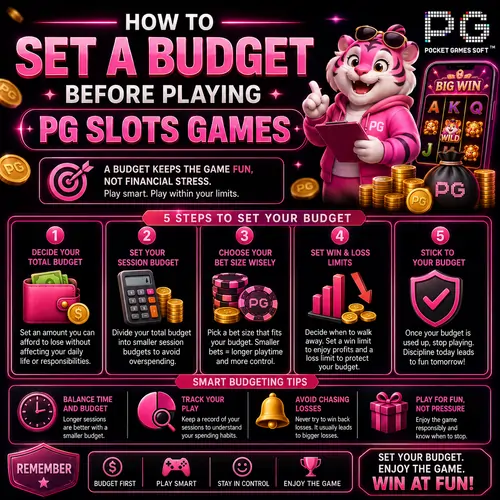
Why How to Set a Budget Before Playing PG Slots Games Matters More Than You Think
Every slot session begins with a choice. You can dive in with hope and a vague idea of what you can afford, or you can take five minutes to plan. The difference between those two paths is the difference between a fun night out and a regretful morning after.
PG Slots games are designed for entertainment. Their rapid spins, bright graphics, and sound effects create an engaging loop. Without a pre-set budget, that loop can pull you deeper than you intended. A budget isn’t a restriction — it’s a tool that gives you freedom to play without anxiety. For a related guide, see Crazy Games You Can Enjoy Anytime – PLAY NOW.
The Real Cost of Playing Without a Budget
Players who skip budgeting often report two outcomes: they either stop too early (fearing losses) or stay too long (chasing losses). Both kill the fun. A clear budget before playing PG slots removes guesswork and emotional decisions.
Consider this: a player with a $100 session budget who loses $80 can walk away satisfied that they stuck to the plan. A player without a budget who loses $80 is more likely to try “just one more spin” to recover — and often ends up losing more.
Step 1: Determine Your Total Bankroll for How to Set a Budget Before Playing PG Slots Games
Your total bankroll is the money you can afford to lose — and nothing else. This is not your savings, rent, grocery money, or credit card limit. It’s disposable income set aside purely for entertainment.
How to Calculate Your Disposable Bankroll
Take your monthly income after taxes and subtract all fixed expenses: housing, utilities, food, transport, insurance, and debt payments. What remains is your discretionary fund. From that fund, decide what percentage you’re comfortable dedicating to slot play.
A common rule among experienced players is to allocate no more than 2–5% of your monthly discretionary income to slots. If you have $500 discretionary, that means $10 to $25 for the entire month. That may sound small, but it’s enough for several short sessions.
Why Your Bankroll Should Be Cash, Not Credit
Always fund your bankroll with cash or a dedicated pre-paid card. Avoid credit cards — interest charges turn a small loss into a long-term burden. Treat your bankroll like a movie ticket: once it’s spent, the show is over until next time.
Step 2: Divide Your Bankroll into Session Budgets
Once you know your total bankroll, split it into session-sized pieces. A session is one continuous period of play — usually 30 to 60 minutes. If your monthly bankroll is $60, you might create six $10 sessions. This prevents burning through your entire budget in one sitting.
Session Budget Example Table
| Total Monthly Bankroll | Session Budget | Sessions per Month |
|---|---|---|
| $60 | $10 | 6 |
| $100 | $20 | 5 |
| $200 | $25 | 8 |
| $500 | $50 | 10 |
The key is to treat each session budget as non-renewable. Once it’s gone, that session is over — no exceptions.
Step 3: Set Loss Limits and Win Goals
A loss limit tells you when to stop. A win goal tells you when to walk away while ahead. Both are essential to setting a slot budget that actually works.
Loss Limits: The 50% Rule
A simple and effective loss limit is 50% of your session budget. If your session budget is $20, your loss limit is $10. When your balance drops to $10, cash out and leave. This preserves half your session money for another day and prevents the emotional spiral of chasing losses.
Win Goals: The 2x Rule
On the flip side, set a win goal of double your session budget. If you start with $20 and hit $40, that’s a great session. Lock in the win by cashing out at least half your profit. This turns luck into real money you can enjoy outside the game.
Step 4: Stick to Your Budget — No Exceptions
Having a budget only works if you follow it. The moment you say “just one more spin” after hitting your limit, the budget loses its value. This is where discipline separates smart players from the rest.
Practical Ways to Stay on Track
- Set a timer on your phone for the session length.
- Use the casino’s built-in deposit or loss limit tools.
- Leave your credit and debit cards at home — bring only your session cash.
- After each session, log your results in a simple notebook or app.
These small habits turn PG slots budget tips into real-world behavior. Over time, they become automatic.
Step 5: Adjust Your Budget Over Time
Your financial situation changes, and your slot budget should too. Review your budget once a month. Did you stick to your limits? Did you enjoy the sessions? Are you comfortable with the amount you’re spending?
When to Increase Your Budget
Only increase your budget if your disposable income has grown and you’ve consistently stayed within your previous limits for at least three months. Never increase a budget to try to recover losses.
When to Decrease Your Budget
If you ever feel stressed about slot spending, or if you’ve exceeded your budget twice in a row, cut your session budget in half for the next month. This resets your relationship with the game and prevents problem gambling patterns from forming.
3 Smart Warnings You Must Know About How to Set a Budget Before Playing PG Slots Games
These three warnings are not theoretical — they come from real player experiences. Ignore them at your own risk.
Warning #1: The 50% Stop-Loss Is Non-Negotiable
If you lose 50% of your session budget, walk away. No exceptions. This isn’t about being a quitter — it’s about being a smart player. Many players lose everything because they thought “the next spin” would turn it around. The math doesn’t support that hope.
Warning #2: The 24-Hour Cool-Off Prevents Impulse Sessions
If you hit your loss limit, do not play again for 24 hours. This gives your emotions time to settle. Impulse sessions after a loss are the most dangerous. They are driven by frustration, not enjoyment.
Warning #3: Never Borrow Money to Play Slots
This is the most important rule in How to Set a Budget Before Playing PG Slots Games. Borrowed money carries interest, guilt, and pressure. Slot play should come only from money you can afford to lose. If you’re tempted to borrow, take that as a clear sign to take a break. For a related guide, see Best Free Online Games for All Ages – PLAY NOW.
Useful Resources
For more information on responsible gambling practices, visit National Council on Problem Gambling. To understand slot game mechanics and payout percentages, check UK Gambling Commission.
Frequently Asked Questions About How to Set a Budget Before Playing PG Slots Games
Frequently Asked Questions About How to Set a Budget Before Playing PG Slots Games
What is the first step in how to set a budget before playing PG Slots games ?
The first step is determining your total disposable bankroll — the money you can afford to lose without affecting your essential expenses.
How much should I budget for a single PG Slots session?
A common recommendation is $10 to $50 per session, depending on your total bankroll. The key is to keep it small enough that losing it won’t ruin your day.
What is a loss limit?
A loss limit is a pre-set amount you are willing to lose in a single session. Once you hit that limit, you stop playing. A good rule is 50% of your session budget.
What is a win goal?
A win goal is a profit target that signals when to cash out. For example, if you start with $20 and reach $40, you’ve doubled your session budget — a great time to stop.
Can I use credit cards for my slot budget?
It’s strongly discouraged. Cash or pre-paid cards are better because they prevent you from spending money you don’t have and avoid interest charges.
How often should I review my slot budget?
Review your budget once a month. Check if you stayed within limits, whether you enjoyed your sessions, and if your financial situation has changed.
What should I do if I exceed my budget?
If you exceed your budget twice in a row, reduce your session budget by half for the next month. Use it as a signal to reassess your habits.
Is it okay to increase my budget over time?
Yes, but only if your disposable income has genuinely increased and you have consistently stayed within your limits for at least three months.
What is the 50% stop-loss rule?
The 50% stop-loss rule means you stop playing once you lose half your session budget. This preserves some money for another day and prevents emotional chasing.
What is the 24-hour cool-off rule?
If you hit your loss limit, wait at least 24 hours before your next session. This delay helps you return with a clear mind, not frustration.
Should I borrow money to play PG Slots?
Never borrow money for slot play. Borrowed money creates pressure and guilt. Only play with money you can afford to lose.
What are PG Slots budget tips for beginners?
Start small, use cash, set a session timer, and always pre-decide your loss limit and win goal. These simple PG slots budget tips build good habits from day one.
How do I know if my budget is too low?
If your budget is so low that you can’t enjoy the session (e.g., you’re stressed about every spin), consider increasing it slightly — but only within your disposable income.
What should I do if I feel addicted to slots?
If you feel losing control, stop playing immediately and seek help from organizations like the National Council on Problem Gambling or Gamblers Anonymous.
Can I use casino tools to help me budget?
Yes. Many online casinos offer deposit limits, loss limits, session timers, and self-exclusion tools. Use them to automate your budget.
Is it okay to play slots for fun without a budget?
Playing without a budget is risky. Even small amounts can add up quickly. A budget ensures you’re playing for fun, not out of compulsion.
How do I track my slot spending?
Keep a simple log in a notebook or a budgeting app. Record the date, session budget, actual money spent, and how you felt afterward.
What is the most important rule in setting a slot budget ?
The most important rule is: never exceed your pre-set loss limit, no matter how tempting “one more spin” may be.
How do I set a budget before playing PG Slots games with a group of friends?
Set individual budgets for yourself first. If you’re pooling money, agree on a shared session budget and loss limit before any spin. Stick to it together.
Can a budget guarantee I won’t lose money?
No budget can guarantee wins. Slots are games of chance. A budget guarantees you won’t lose more than you planned — which is the real win.